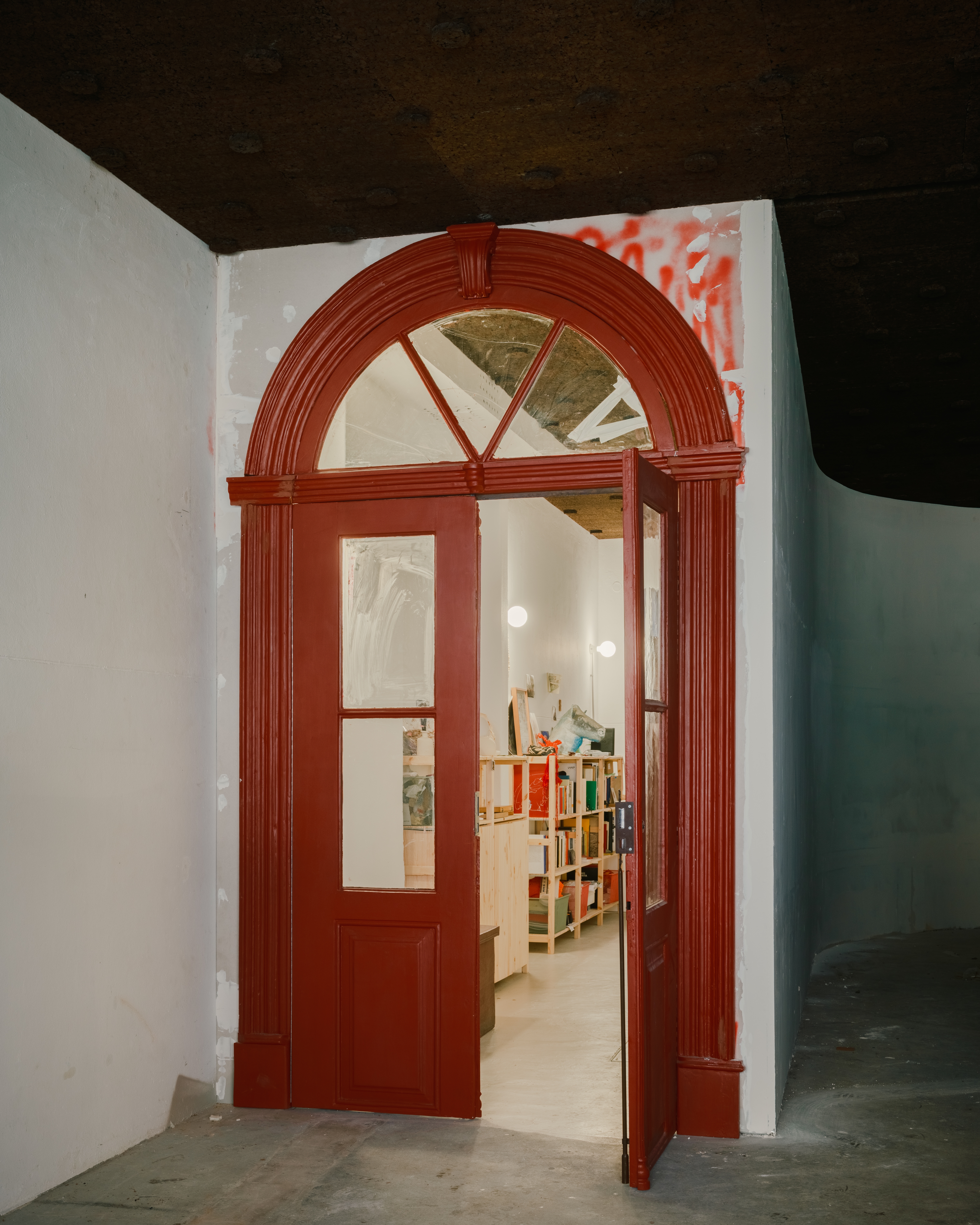
Paranhos II
Porto, 2024–25
Team
João Paupério
Maria Rebelo
Francisco Craveiro
Kitchen
fala
Landscape
pomo
Photography
Francisco Ascensão
Paranhos II
Porto, 2024–25
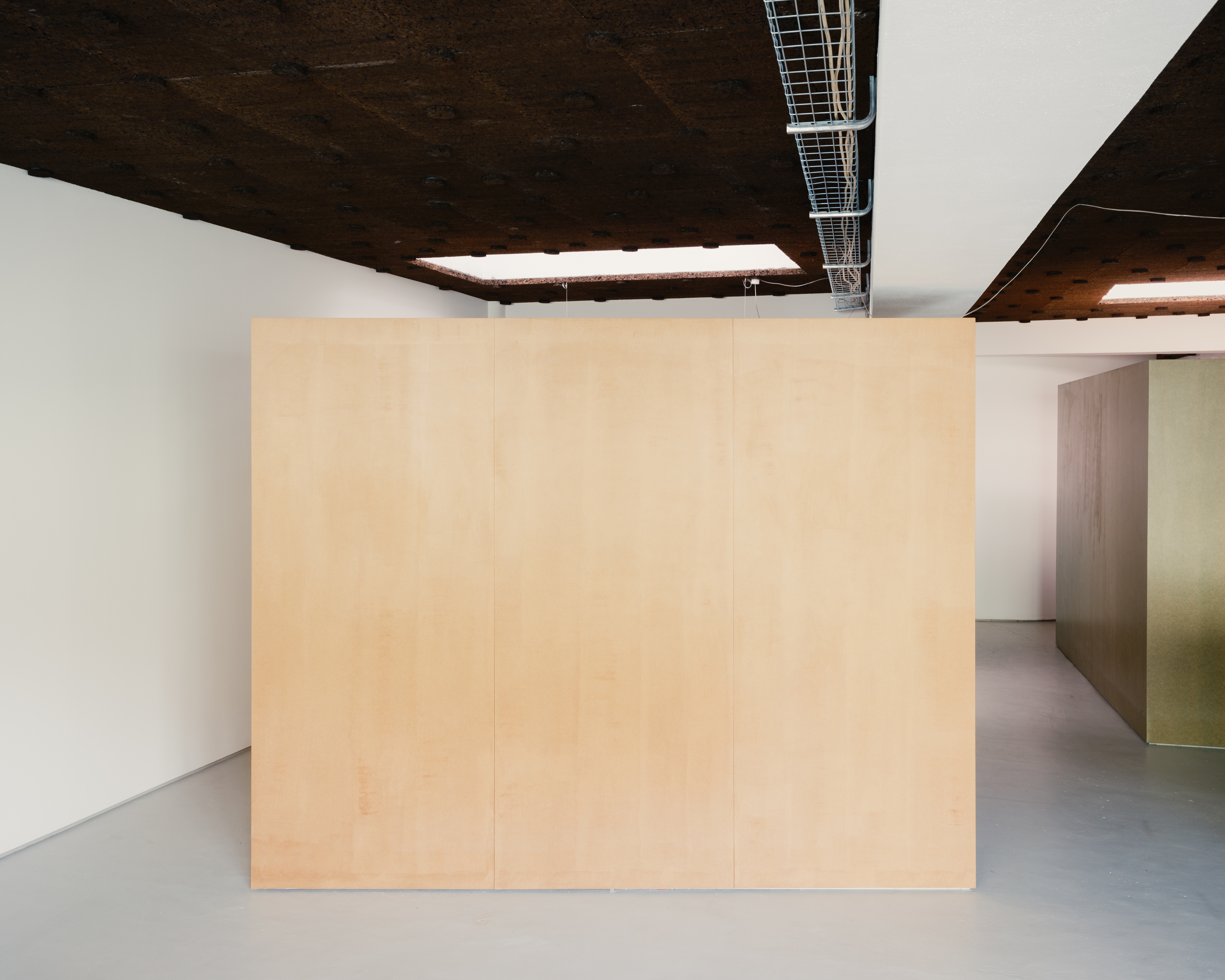
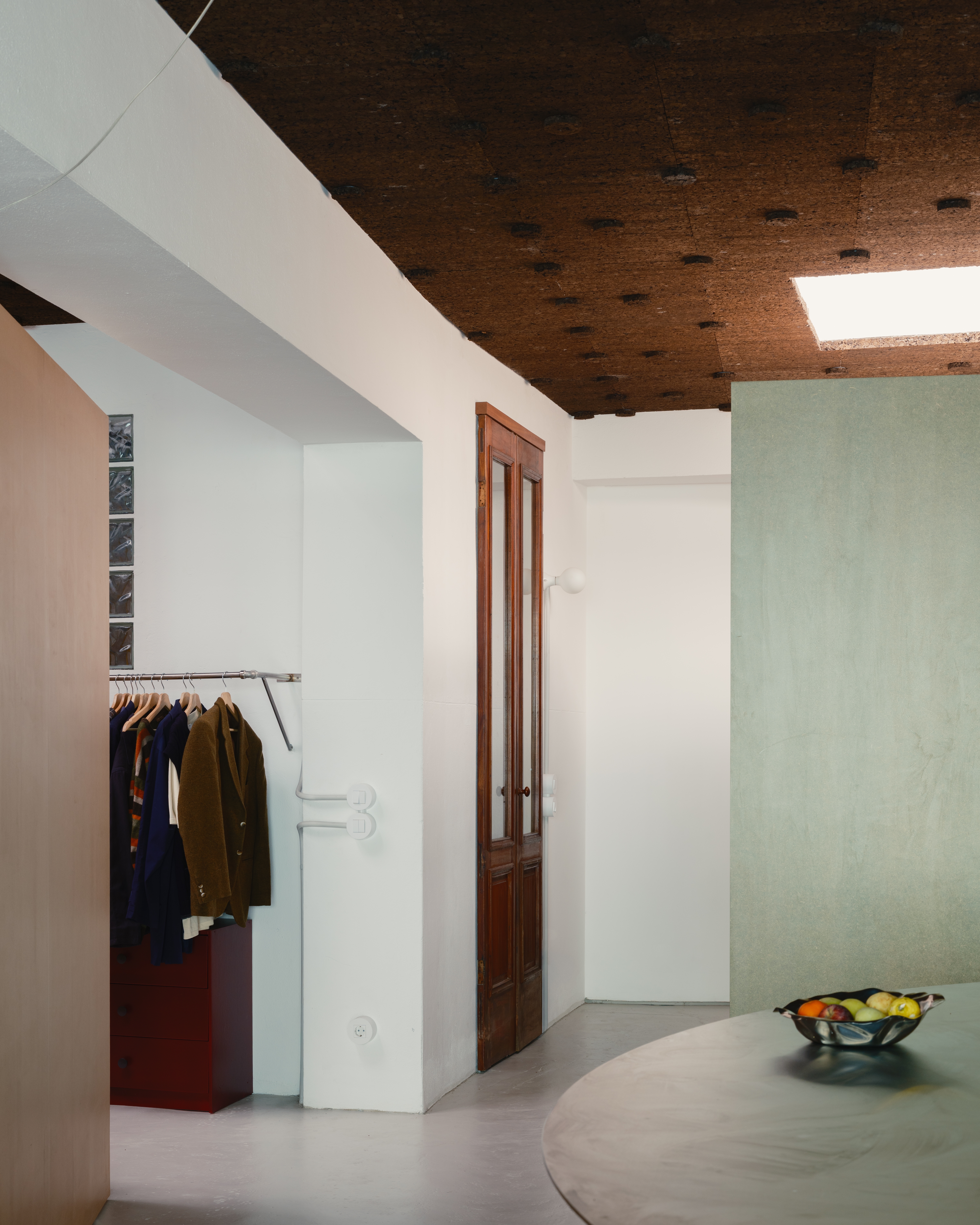
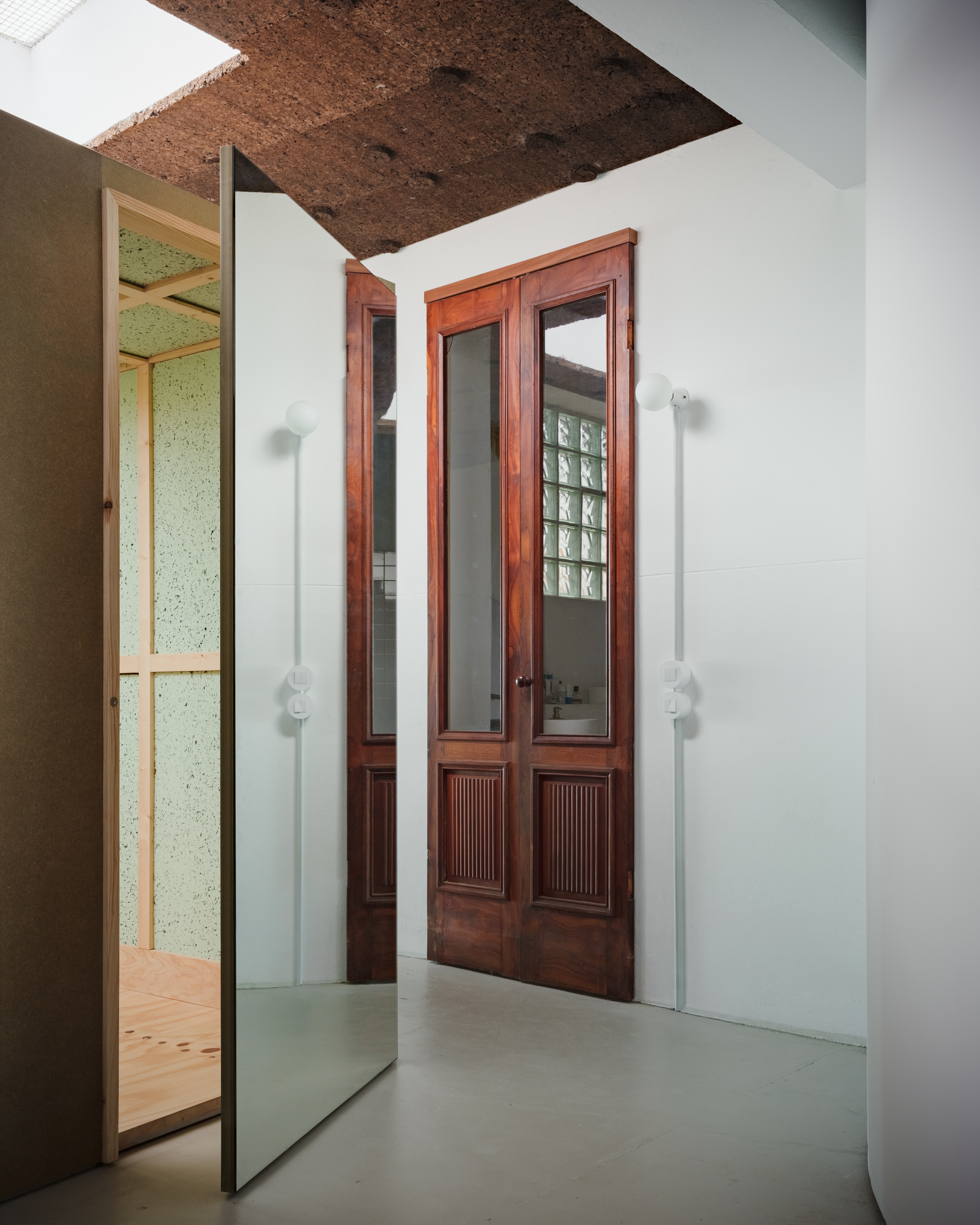
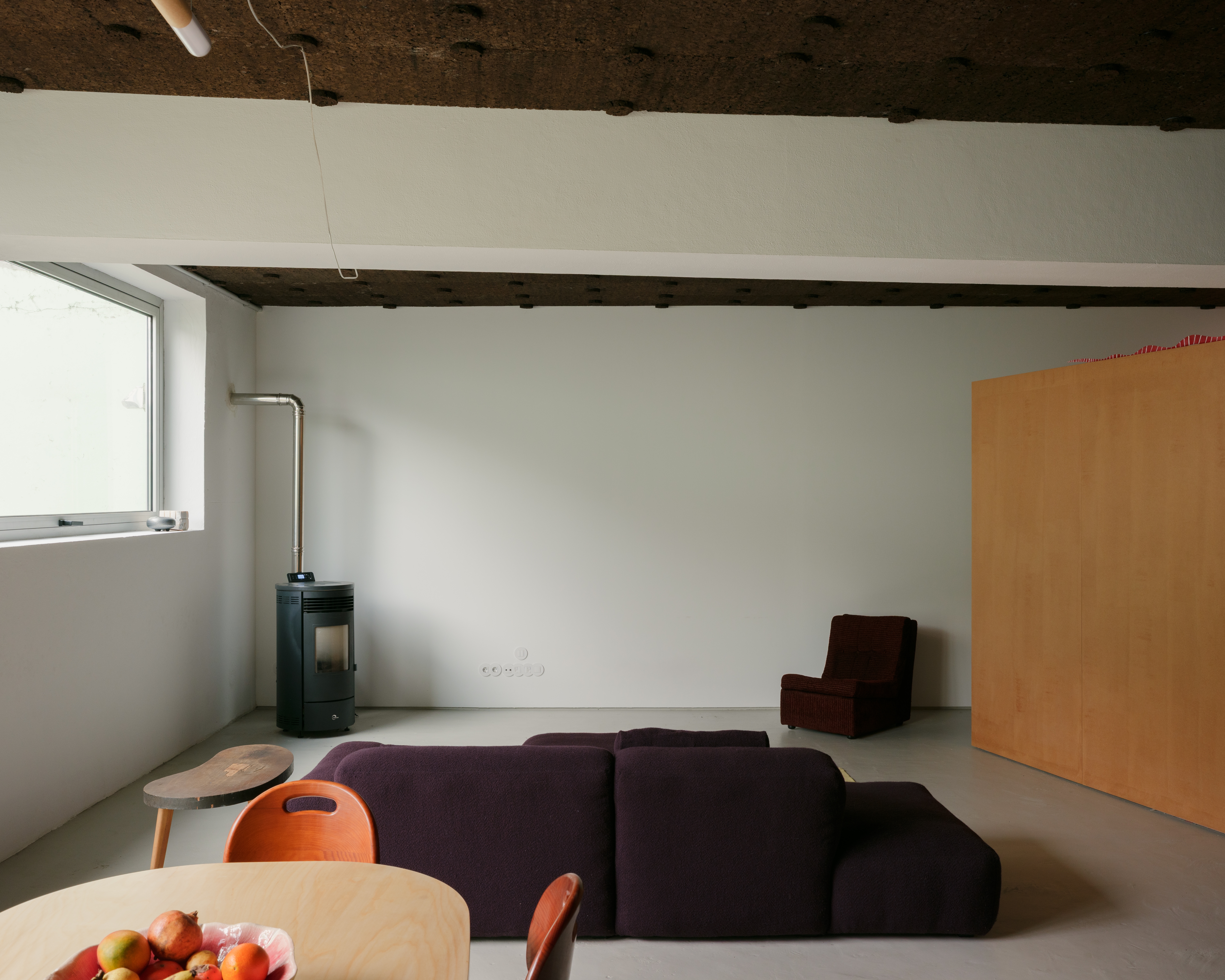
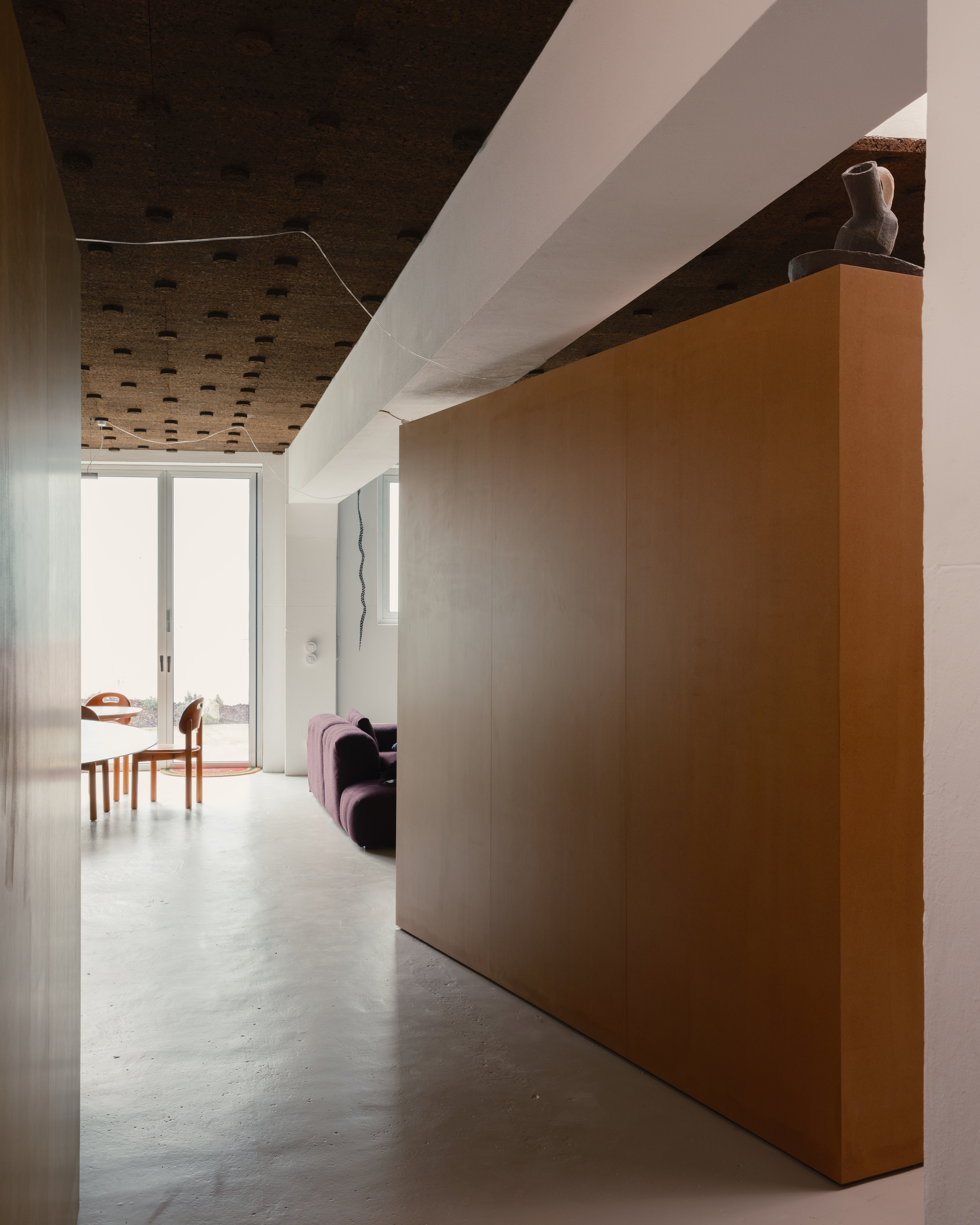
In addition to minor repairs, the project consisted of two wooden boxes, inspired by medieval box-beds.
In co-authorship with Francisco Craveiro.
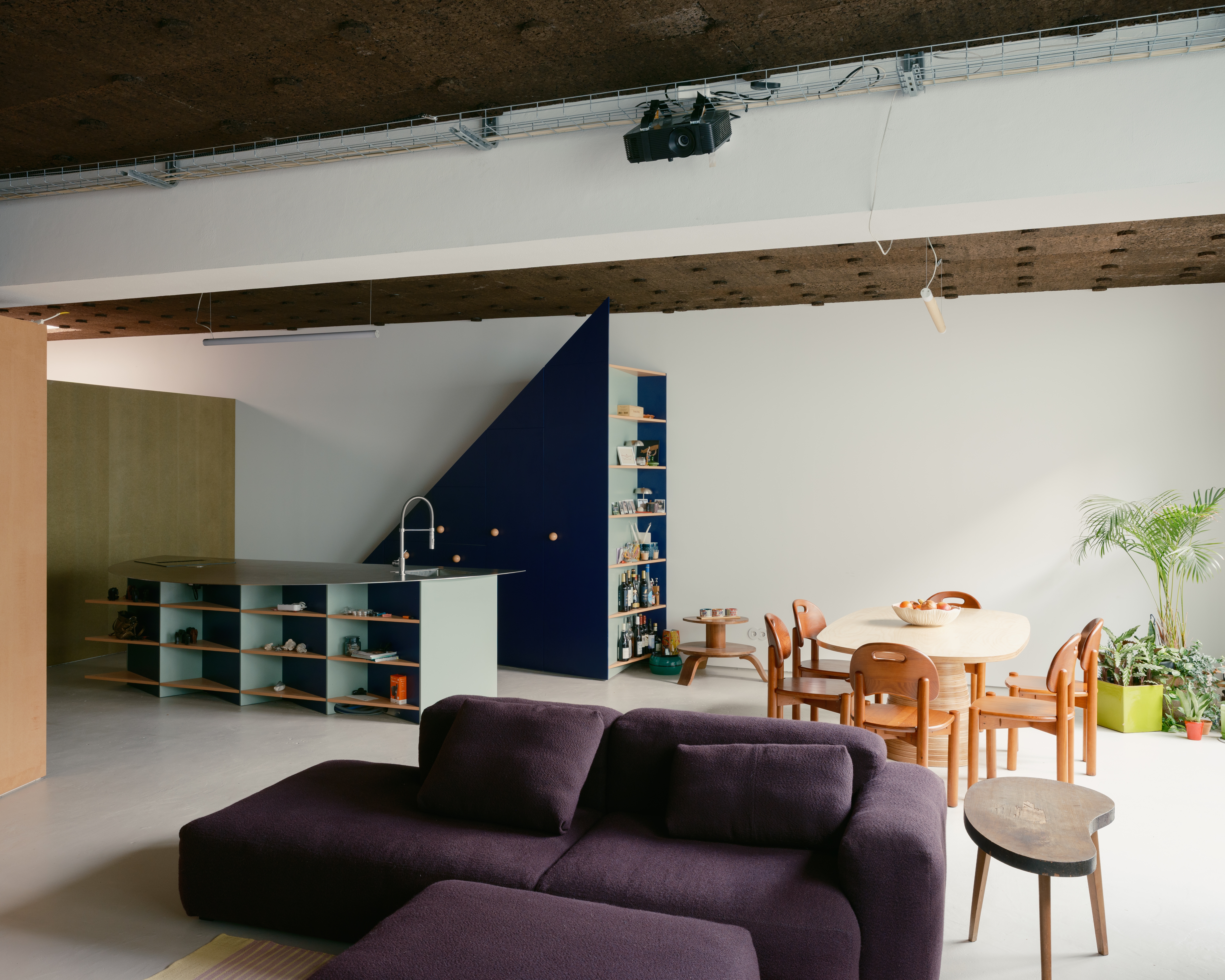
Transforming the space of an old car repair shop into a home opens up new possibilities for the architecture of the house, assuming that the latter is not understood as such. That is, if we do not strive in vain to fit into an uninhabitable space the images, precepts and ways of living that we have inherited in a crystallised form. Basically, if a home is not a house, as Reyner Banham wrote in 1965. To a certain extent, if we consider it as a fragment of a larger city, the house is nothing more than a shelter to protect its inhabitants from the elements, as well as to satisfy their most immediate physiological needs and guarantee the inconveniences of privacy. From this point of view, the existing space of the old garage is as strange as it is apt and, above all, generous in comparison to the increasingly minimal existence suggested by properties found on the market today.
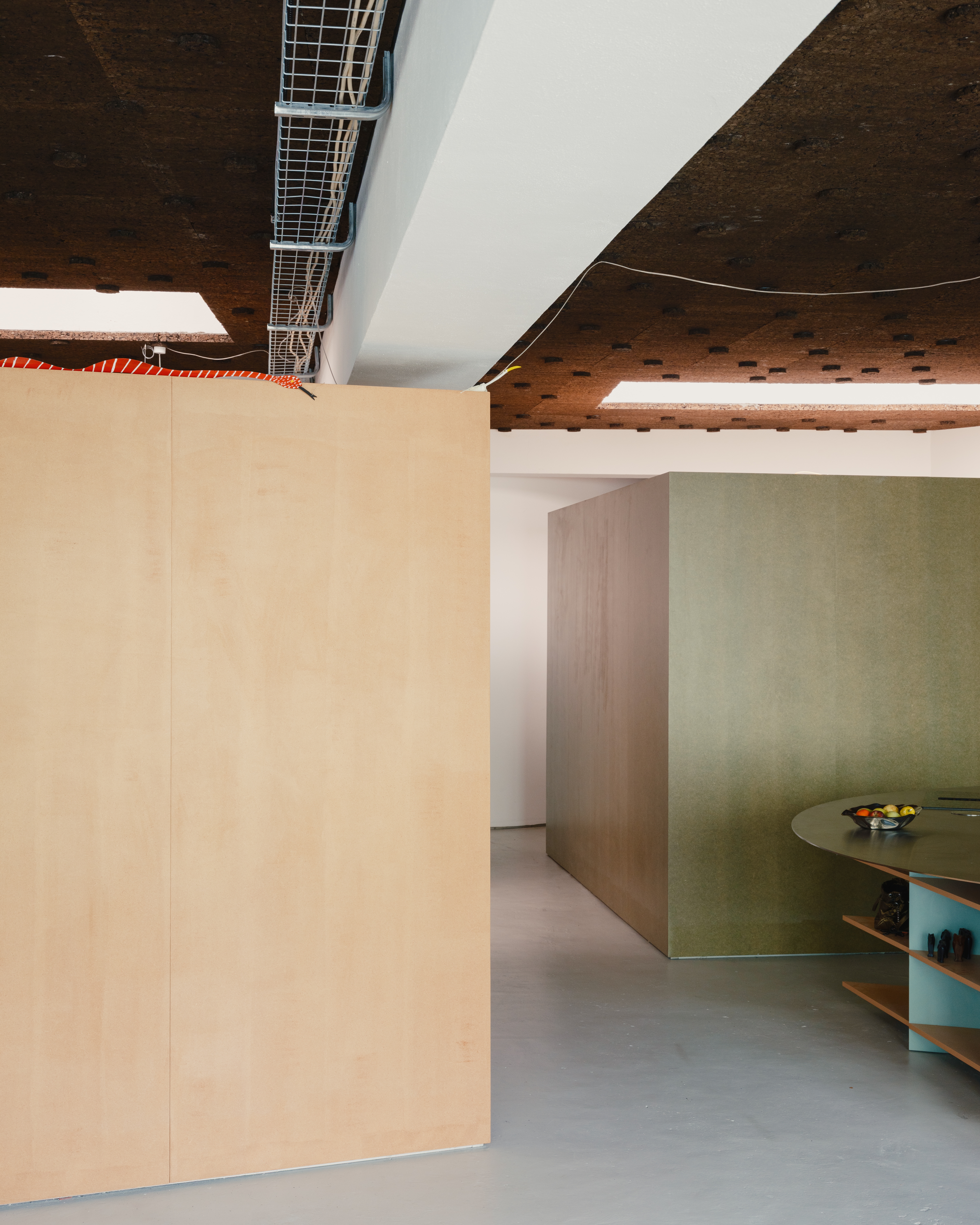
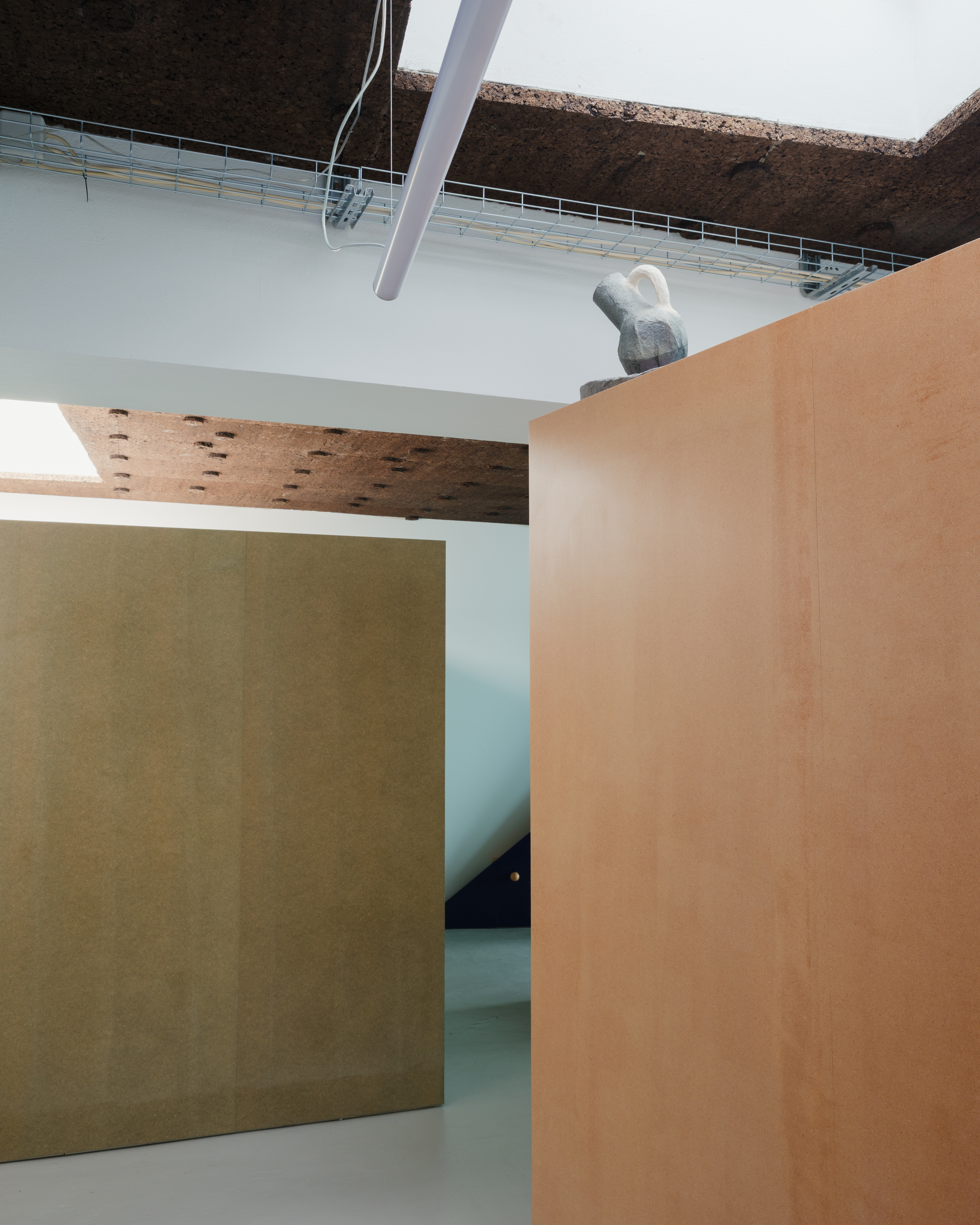
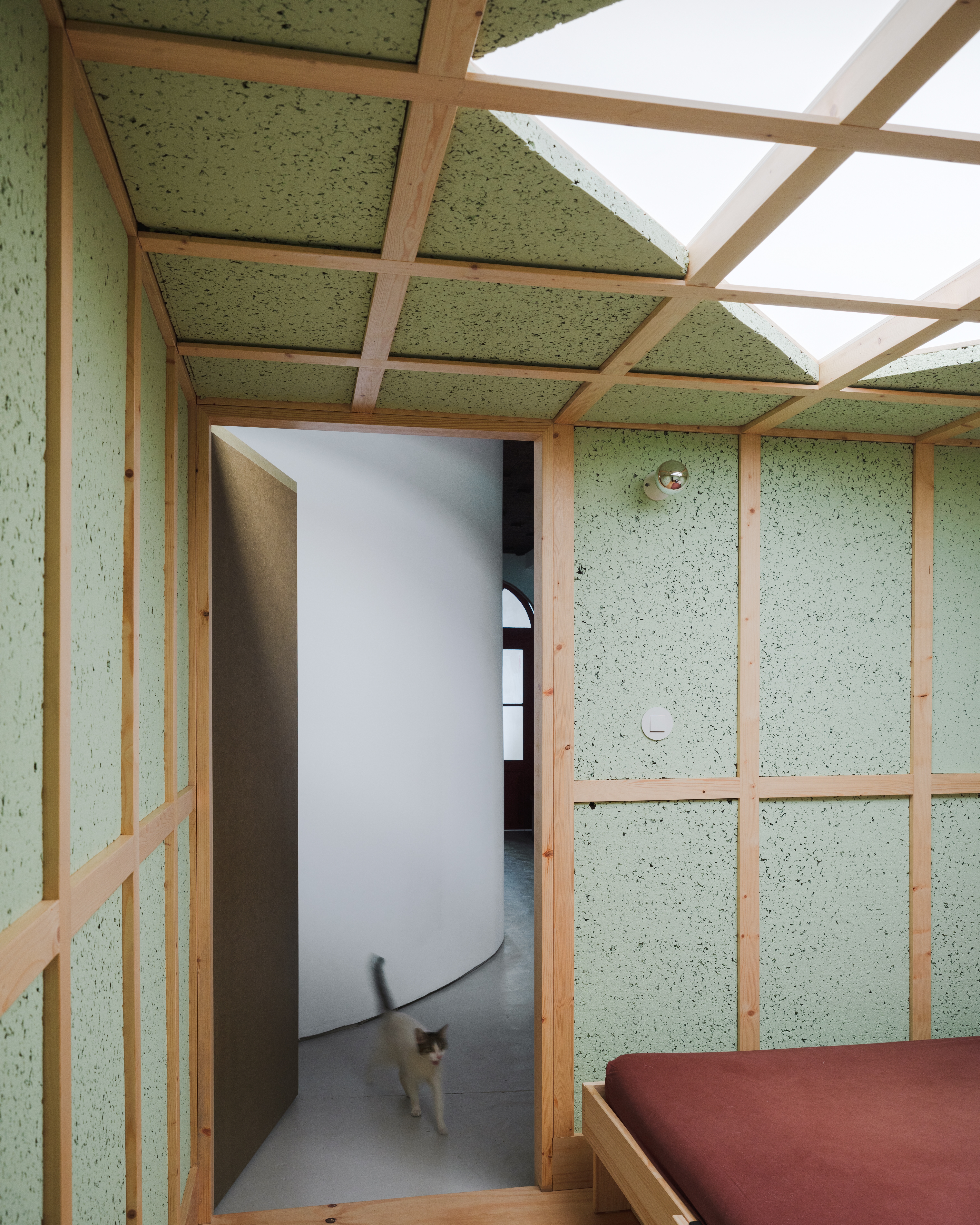
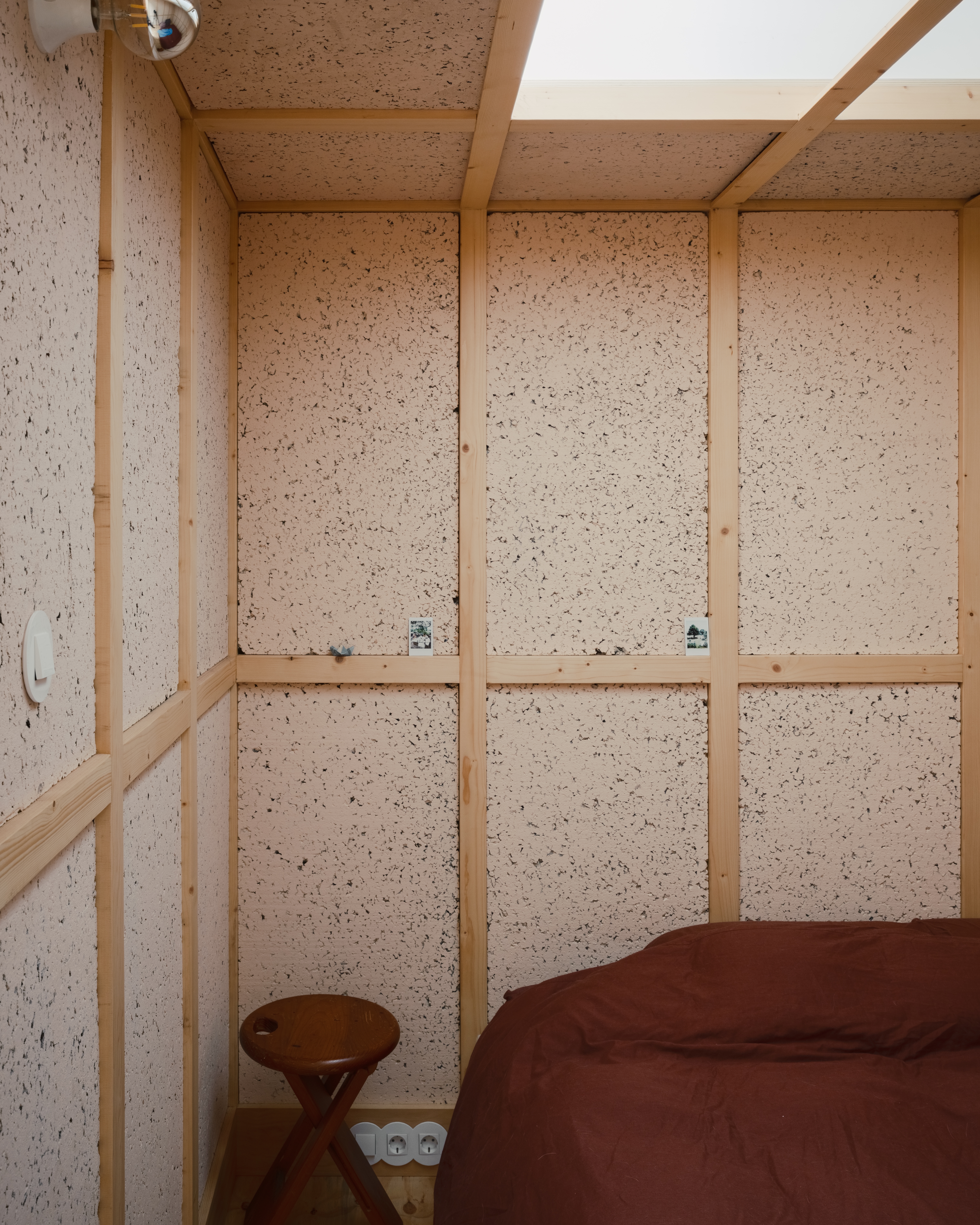
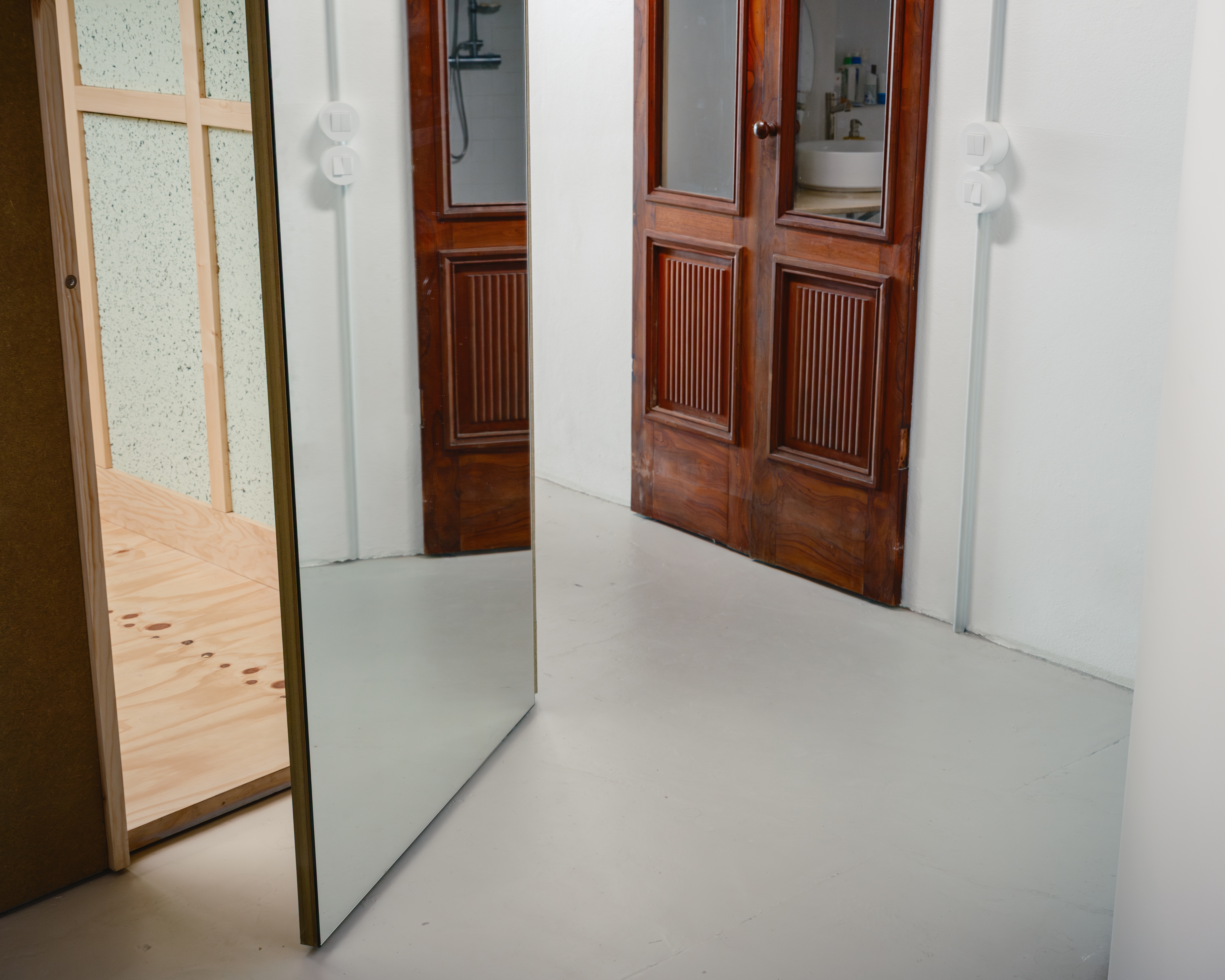
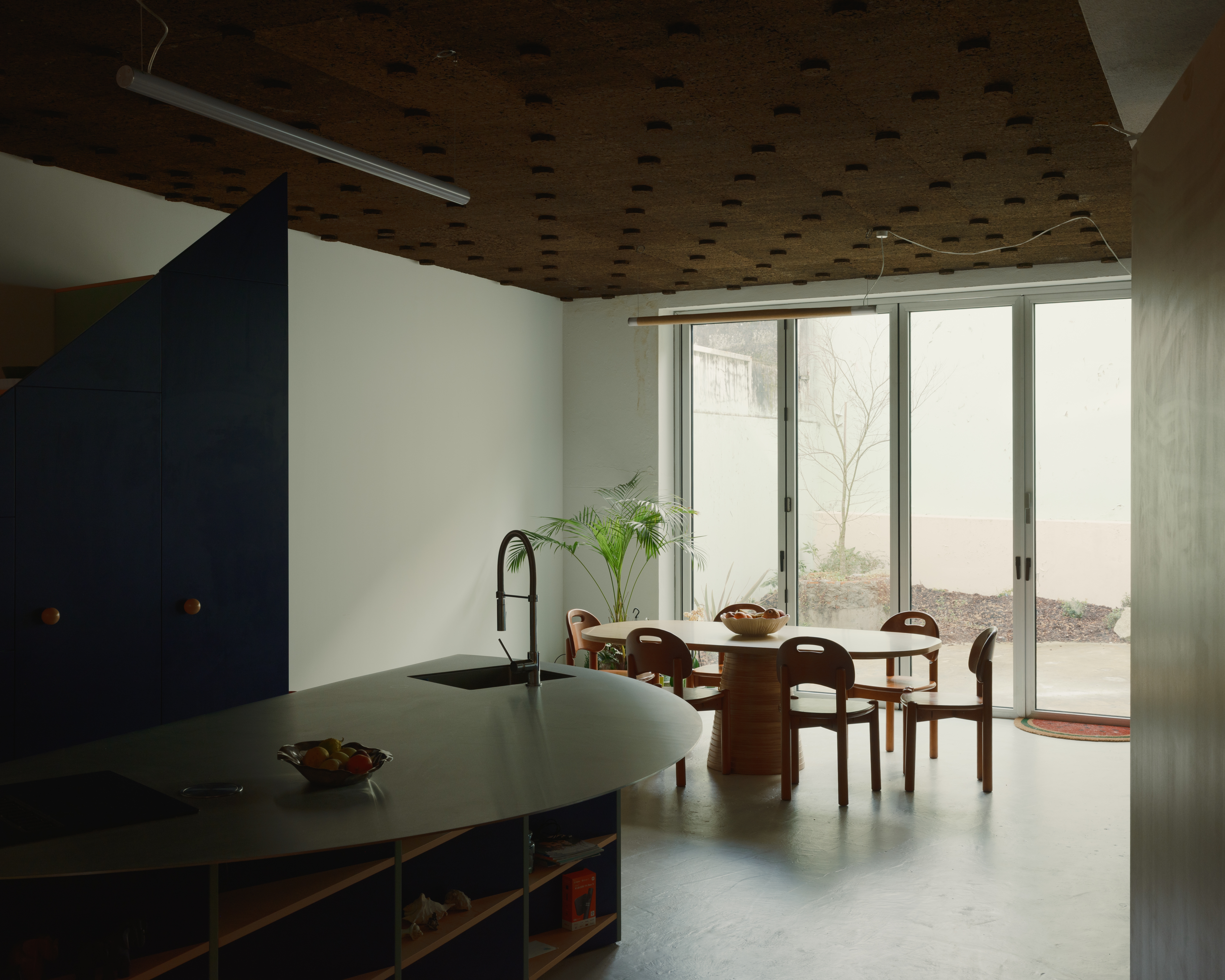
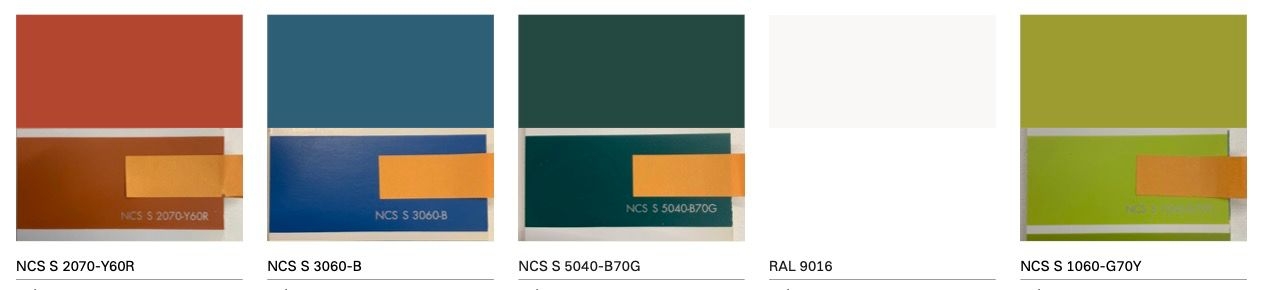
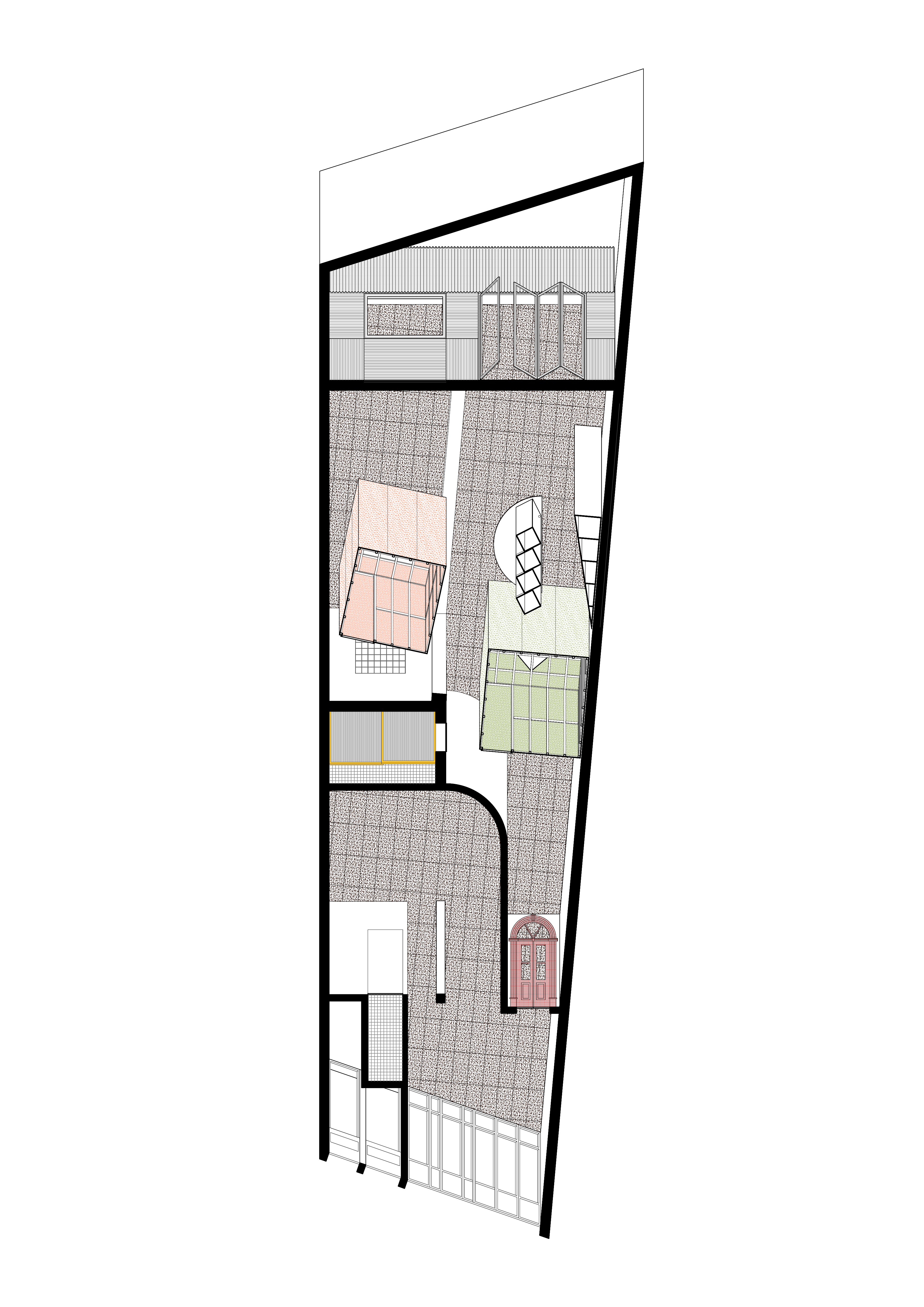
The programme only required the space to be divided in two, between work — overlooking the city— and home —overlooking a small courtyard, designed by pomo. The curve of the wall that translated this request accentuates the feeling of seclusion for those who now discover the house through a maze. The existing bathroom was refurbished. The intervention on the floor, walls and ceilings was minimal. It consisted mainly of thermal and acoustic insulation (using exposed cork) as well as replacing the window frames to ensure proper energy efficiency. Painting them was a requested by the clients. In addition to these minor repairs, the project consisted of designing just two wooden boxes inspired by medieval box-beds: made from domestic pine, MDF boards and cork panels. Sitting under the existing skylights, these boxes ensure a final layer of privacy and comfort for those living in this kind of camping ground, whose fire is symbolised by a new wood-burning stove.
In addition to their practical usefulness, the design of these sleeping compartments as pieces of furniture rather than rooms suggests that it will be through a process of appropriation — through objects collected over time — that this open field will be transformed into a home. Proof of that movement, over which we do not believe ourselves, as architects, should have total control, is the new kitchen designed by fala atelier and brought into this garage as a sort of first ready-made.
In July 2026, Paranhos II was one of the works chosen to be part of the Open House Porto itinerary.